A Flag Is Not a Strategy: Britain's Warship Diplomacy Under Strain
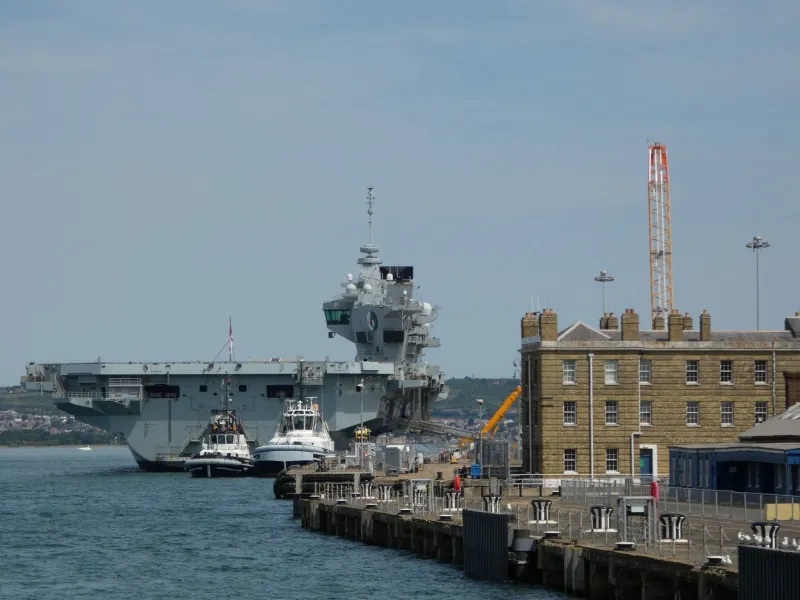
A warship arriving in a foreign port remains one of the most legible gestures in international politics. There is steel, ceremony and a camera-friendly backdrop. For a British government anxious to demonstrate global reach, the appeal is obvious: deployments are visible, politically portable and require no treaty ratification. Yet the flag a warship flies can obscure as much as it announces. Naval diplomacy is useful only when it expresses a strategy; it cannot substitute for one.
The allure of the visible
Ministers reach for warship deployments because they solve a presentational problem. A carrier strike group sailing through the Indo-Pacific, or a destroyer berthing in the Gulf, conveys presence without the friction of basing rights or the cost of a permanent overseas commitment. It reassures partners, trains crews and reminds rivals that Britain retains blue-water ambitions. Port visits also do quieter work: they support defence relationships, open commercial conversations and give diplomats a stage.
But a visit is an episode, not a posture. Allies are increasingly sophisticated readers of military signals. They distinguish between a ship that passes through and a capability that stays. A frigate that arrives for a few days of exercises, then returns home, is a diplomatic gesture. A sustained presence — with maintenance, intelligence-sharing and follow-on training — is a commitment. Britain has often been able to offer the first more easily than the second.
The arithmetic beneath the flag
The Royal Navy is not short of missions. It is short of hulls, crews and the industrial depth needed to sustain them. Two aircraft carriers provide a striking symbol of intent, but a carrier is only as useful as the escorts, tankers and support ships around it. The escort fleet is ageing and thinly stretched; the transition to new frigates and destroyers is real but slow. Every deployment east of Suez consumes maintenance windows, training time and personnel. A ship sent to the Gulf or the Pacific is a ship not available for the North Atlantic, home waters or the next crisis.
This is not a complaint about ambition. It is a warning about arithmetic. Naval diplomacy has a cost that is easy to hide in a photograph and hard to hide in a defence programme. When the fleet is small, visibility becomes a zero-sum game. The question is not whether Britain can send a warship somewhere, but what it must leave uncovered by doing so.
What partners actually read
In the Gulf, Britain's naval presence is bound up with energy security, shipping lanes and a long history of arms sales and investment. Partners there value continuity, not cameos. In the Indo-Pacific, London is not a resident power. Regional governments welcome British engagement, but they measure it against the sustained attention of the United States, France, Japan and Australia. A drive-by deployment can create expectations that Britain cannot meet, or invite the conclusion that its Indo-Pacific tilt is primarily rhetorical.
There is also a risk of commitment inflation. A warship visit may be read in London as a strategic statement and in the host capital as a commercial or ceremonial courtesy. When those readings diverge, the result is not influence but confusion. Naval diplomacy works best when the political purpose is explicit: deterrence, reassurance, interoperability or trade. It works worst when it is asked to do all four without a clear hierarchy.
Presence without premise
The problem is not that Britain deploys warships. It is that deployments are too often asked to carry a strategy that has not been written. A credible naval posture would begin with a narrower definition of interests: the Euro-Atlantic core, the Gulf's shipping and energy routes, and the Indo-Pacific's trade and security architecture. It would then ask which of those interests require a British hull, which can be met through allies, and which are better served by diplomacy, intelligence or industrial cooperation.
That points towards fewer, better-supported deployments rather than a scatter of port calls. Britain should prioritise multinational formations, where a single ship joins a larger allied effort and gains political weight it could not generate alone. It should invest in the unglamorous enablers — logistics, munitions, maintenance and crew retention — that make presence sustainable. And it should be honest with partners about what follows the visit: exercises, training, port access or a return next year.
The flag and the ledger
A visible flag still matters. In a dangerous world, allies want to see that Britain is willing to show up. But showing up is not the same as shaping outcomes. A warship can announce a country's intentions; it cannot supply the strategy behind them. If Britain wants its naval diplomacy to be more than a photograph, it must accept the discipline of choosing where to be, explaining why, and sustaining the presence long enough to be believed.