Before the Photo Op: The Quiet Officials Who Draft the G20's Compromises
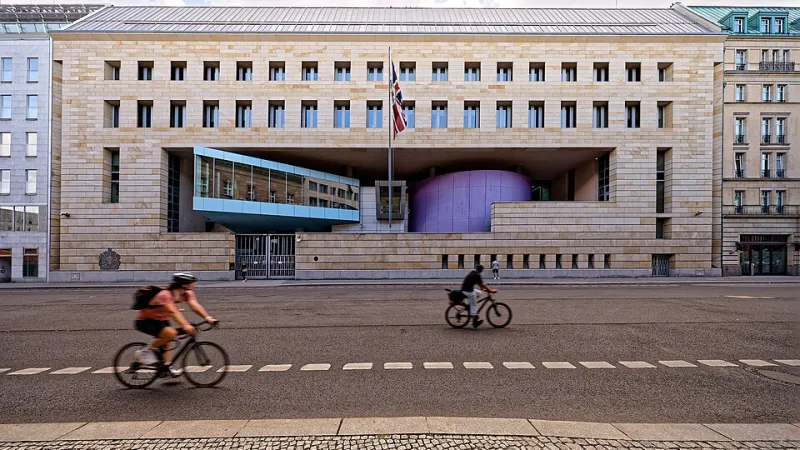
Photo: This image is a work by Wikipedia and Wikimedia Commons user C.Suthorn. When reusing, credit me as described in the Licensing information below. I would appreciate being notified (wikimail, talk page, email, Social Media) if you use my work outsid
Every G20 summit follows a familiar choreography. Leaders arrive, exchange handshakes, read carefully drafted statements and pose for photographs. The communiqué is presented as the product of their deliberations. In reality, most of it has been written long before they enter the room. The real negotiations take place in hotel meeting rooms, video calls and drafting sessions involving officials whose names most voters would not recognise.
This is not a conspiracy. It is how modern summitry works. But it is worth understanding, because the gap between what leaders say and what officials have already agreed shapes what the G20 can actually deliver. In 2026, with geopolitical divisions making consensus harder, that gap is likely to be wider than usual.
The two tracks
The G20 runs on two parallel tracks. The finance track brings together finance ministers, central bank governors and their deputies to negotiate economic and financial language. The sherpa track is led by personal representatives of heads of government, who manage the broader agenda: trade, climate, development, health, digital policy and foreign policy language. Beneath them sit sous-sherpas, working groups and drafting teams.
The sherpas are the hinge. They set priorities with the presidency, broker compromises between capitals and decide which disagreements are serious enough to send upwards. By the time leaders meet, the sherpas have usually produced a text that is either agreed or deliberately ambiguous. The leader's role is often to bless a compromise, not to make one.
Who speaks for the UK?
The UK's G20 sherpa is a senior official, typically drawn from the Foreign Office or Downing Street, supported by a finance deputy from the Treasury. These officials are not elected. They report to the prime minister and chancellor, and they operate within a mandate set in London. Their power is real but bounded: they can shape agenda items, draft language and build coalitions, but they cannot commit the UK to anything ministers have not authorised.
That is the theory. In practice, official-level negotiations create facts on the ground. A paragraph that survives the sherpa process is hard for a leader to reopen without appearing to wreck the summit. A phrase that is dropped at official level may never be debated by ministers at all. This is why the identity and instincts of the UK's sherpa matter, even though the role rarely attracts public attention.
How a communiqué is actually made
The process is more improvised than it looks. The presidency circulates drafts, often starting with 'non-papers' that test appetite for different language. Sherpas meet in person and online, usually several times before the summit. Draft text is filled with brackets as countries stake out positions. Officials then work through the brackets, trade language and look for formulas that allow everyone to claim victory.
A communiqué is not a treaty. It is a political document, and its language is carefully calibrated. 'We commit' is stronger than 'we call on'. 'We note' is weaker still. 'We welcome progress' can hide a complete failure to agree on new money. 'We recognise the need for reform' can mean that no one could agree on what reform entails. Leaders sometimes add a chair's statement to paper over divisions that the communiqué cannot conceal.
Why 2026 is different
The G20 has always struggled with consensus, but the current period is particularly difficult. Major powers disagree over Ukraine, sanctions, trade subsidies, debt relief, climate finance and the rules of the digital economy. The result is often a lowest-common-denominator text that sounds ambitious but commits little. That is not necessarily a failure. In a fragmented world, keeping a major economy talking to rivals is itself a diplomatic achievement. But it is a modest one, and it should be described as such.
For UK readers, the practical question is whether Britain is using the sherpa track to advance its interests or merely to avoid isolation. The UK is not a superpower, but it has a strong diplomatic network, a credible development record and useful relationships across the G20. That gives its officials scope to shape language on issues such as debt, climate adaptation and financial stability. Whether they do so depends on political direction from London and on the skill of the officials in the room.
What to watch
When the next G20 communiqué appears, read it for verbs rather than adjectives. Look at what leaders actually commit to do, and by when. Watch for footnotes, chair's statements and language that defers decisions to future meetings. Ask which countries blocked the strongest paragraphs, and whether the UK was among them.
The photo opportunity is the least important part of the summit. The compromises that matter are made earlier, by people who are paid to be unglamorous. If British readers want to understand what the G20 really decided, they should look past the leaders and towards the sherpas.