The Parallel Portfolio: Britain's Metro Mayors and the Foreign Policy Nobody Voted For
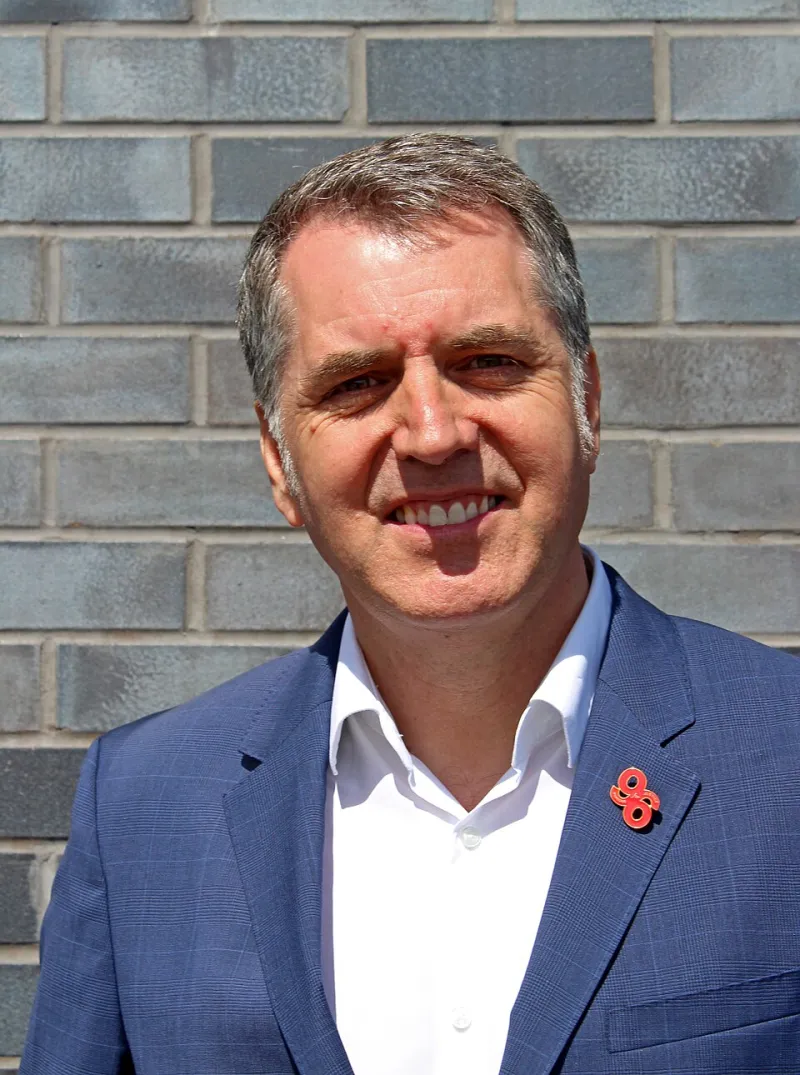
Photo: Rodhullandemu, CC BY-SA 4.0, via Wikimedia Commons
It has become a familiar sight at provincial airports: a metro mayor, a clutch of business delegates and a three-day itinerary of receptions, factory visits and memoranda of understanding. The destination might be the Gulf, the American Midwest or a Chinese provincial capital. The purpose is usually described as investment promotion. The effect, cumulatively, is something closer to a second foreign policy — conducted by town halls, funded by local budgets, and scrutinised by almost nobody.
This is not a scandal. It is a structural consequence of devolution that Westminster has never properly come to terms with. Successive rounds of devolution deals, from the first mayoral combined authorities in 2017 through the later waves, handed England's city-regions a general power of competence and a mandate to pursue economic growth. International engagement sits comfortably within that mandate. What it does not sit within is any coherent national framework for deciding who speaks for Britain abroad, on what subjects, and with what authority.
A passport issued by the town hall
The legal position is tidier than the practice. Foreign affairs remain reserved to Westminster; a mayor cannot conclude a treaty or bind the United Kingdom to anything. But the modern repertoire of subnational diplomacy rarely requires formal powers. A sister-city agreement, a joint declaration on clean energy, a letter of intent with a foreign investment fund, a speaking slot at a trade fair — none of these needs the Foreign, Commonwealth and Development Office to sign off. They need only a flight, a cheque and a willing counterpart.
Scotland, Wales and Northern Ireland have developed their own international strategies with rather more institutional backing, though within the same reserved-matters constraint. England's metro mayors have done something less formal and, in some respects, more interesting: they have built relationships from the ground up, often drawing on diaspora communities, universities and port authorities that were internationally minded long before City Hall was.
What the missions actually deliver
It would be lazy to dismiss this activity as junketry. The returns are real, if uneven. Inward investment leads are the most tangible currency, and mayors can point to genuine successes in attracting firms that might otherwise have chosen Dublin, Frankfurt or Amsterdam. Export advice delivered regionally often works better than a distant national programme, because the adviser knows the local supply chain. University partnerships, cultural exchanges and the patient work of maintaining relationships with sister cities all generate a form of soft power that Whitehall cannot manufacture from a desk in King Charles Street.
Yet the metrics are soft. A memorandum of understanding is not a contract. A photograph with a foreign minister is not a commitment. Combined authorities report their international activity in annual accounts that few read, and the causal link between a mayoral mission and a subsequent investment decision is almost impossible to establish. In an era of constrained local budgets, the opportunity cost deserves more attention than it receives: every pound spent on a delegation is a pound not spent on skills, transport or housing.
The scrutiny gap
The more serious problem is accountability. Combined authority scrutiny committees exist, but they are thinly resourced and rarely equipped to interrogate international engagement. Local newspapers, once the main check on civic foreign travel, have receded. Mayoral election turnout has often struggled to clear thirty per cent, which weakens the democratic mandate that leaders invoke when they travel. There is no equivalent of the Foreign Affairs Committee for the mayoral tier — no body that systematically asks what was said, to whom, at whose expense, and with what result.
Freedom of information requests remain the main instrument, and they are a blunt one. They arrive months late, are routinely redacted on commercial grounds, and depend on a journalist or campaigner caring enough to file them. For a country that prides itself on parliamentary oversight of diplomacy, the parallel portfolio is strikingly opaque.
When the local line collides with the national one
There are also moments of friction. A mayor may meet an official whom London considers beyond the pale, or pursue a twinning with a city in a country under sanctions. The FCDO's instinct in such cases is to manage the problem quietly rather than confront it, partly because confronting it would raise awkward questions about who is actually in charge. The doctrine that foreign policy is reserved has proved elastic in practice: mayors cannot make policy, but they can make facts, and facts accumulate.
This is not an argument for centralising civic diplomacy. Local leaders are often better placed than ambassadors to understand their region's economic interests, and much of the value lies precisely in their independence from national political weather. But independence without visibility is a recipe for inconsistency. If a mayor is going to speak for a British city on the world stage, the public should at least be able to see the script.
A diplomacy that needs a map
The remedies are modest and could be adopted without new legislation. A public register of international engagements by combined authorities would cost little and clarify much. A standing liaison arrangement between the FCDO and the mayoral tier — not a veto, but a channel — would reduce the risk of accidental contradiction. Strengthened scrutiny at the combined authority level, with a specific remit for international activity, would give councillors a genuine role rather than a rubber stamp.
None of this would end the practice of mayors going abroad, nor should it. Britain's diplomatic reach is thinner than it was, and a country that has shrunk its formal footprint can ill afford to discard the informal channels that remain. But a second foreign policy conducted in the margins of devolution needs to be legible, auditable and answerable. At present it is none of those things. The mayor abroad is a fact of British public life; the map of what he or she is doing there has yet to be drawn.