The Scattered Estate: Britain’s Overseas Territories and the Price of Sovereignty

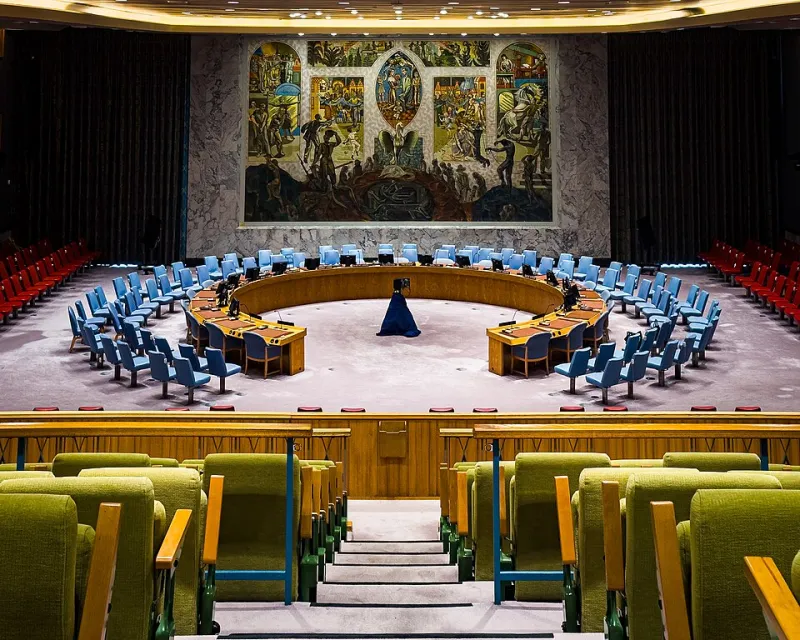
Photo: Md. Ahsanul Haque Nayem, CC BY-SA 4.0, via Wikimedia Commons
Britain rarely talks about empire any more, but it still administers fragments of one. From the Rock of Gibraltar to the runway on Diego Garcia, from the peat bogs of the Falklands to the volcanic slopes of Montserrat, the UK’s Overseas Territories are the places where British power is most concentrated and least debated. In 2026 they deserve more attention than they receive.
An estate in search of a strategy
The territories are not a single thing. Some are strategic platforms: Gibraltar, the Falklands, Diego Garcia, Ascension. Some are financial centres with constitutions, courts and complaints about their reputations. Some are small communities exposed to hurricanes, volcanic ash and the indifference of distant capitals. Whitehall tends to treat them as a portfolio inherited from history rather than a doctrine to be argued for. That is the first problem.
Sovereignty here is not an abstraction. It is a runway, a reef, a shipping lane, a fishing licence and a seat in a negotiation. It is also a passport, a budget line and, occasionally, a promise that London will send a task force. The question for 2026 is not whether Britain still has overseas territories. It is what Britain thinks they are for — and whether the people who live in them are partners in that answer or footnotes to it.
Chagos: the bill for a base
The Chagos Archipelago is the clearest test. Under the agreement signed with Mauritius in 2025, Britain is ceding sovereignty over the islands while retaining a long lease on Diego Garcia, the atoll from which the United States operates a major military facility. The deal is now moving through ratification and implementation in 2026. It is presented in London as a pragmatic settlement: it preserves the base, settles a long legal dispute and improves relations with a partner in the Indian Ocean.
It is also a reminder of what sovereignty costs. The Chagossians were removed from the islands in the late 1960s and early 1970s to make way for the base. Their right of return has been contested, promised and qualified for decades. In 2026 the question is not whether Diego Garcia matters. It plainly does. The question is who pays for it, who is consulted, and whether a lease signed thousands of miles away can ever be described as a settlement for the people who were displaced to make it possible.
Mauritius gains legal title. The United States keeps a base. Britain keeps a lease, a strategic relationship and a bill. The Chagossians keep a grievance. That is not so much a resolution as a reallocation of legal text.
Gibraltar: sovereignty by arrangement
Gibraltar shows a different model. The Rock is not a colony in the old sense; it is a self-governing community with British citizenship, its own parliament and a fierce sense of identity. The post-Brexit framework with the European Union is designed to keep the border with Spain open and the economy functioning. In 2026 the details still matter enormously to people who cross daily for work, but the principle is clear: sovereignty is being exercised through treaty, not simply asserted by flag.
For Gibraltarians, the arrangement is pragmatic. For London, it is a reminder that sovereignty can be pooled without being surrendered. For Madrid, it is a way of managing a dispute without resolving it. The danger is that such arrangements become technical fixes that postpone political choices. Gibraltar is not a bargaining chip in the way Chagos was, but it is still a place where British sovereignty is defined by what Britain is willing to negotiate.
The Falklands and the small islands
The Falklands remain a red line for London, and rightly so in the eyes of most islanders. The 1982 war settled the question of whether Britain would defend them; it did not settle the cost of doing so. In 2026 the islands are prosperous, self-confident and strategically useful, but their defence is expensive and their economy is exposed to shifts in fishing licences and energy prices. Argentina’s claim has not disappeared, even if it is pursued with different language.
The smaller territories are less visible and more vulnerable. Anguilla, the British Virgin Islands, the Turks and Caicos, Montserrat and others face hurricanes, climate finance gaps and repeated arguments about tax transparency and financial regulation. St Helena and Ascension are Atlantic assets with tiny populations and large maritime zones. Pitcairn is a liability of a different kind: a remote community whose future depends on British administration more than most voters in the UK realise.
Who speaks for the islanders?
Territory citizens are British citizens, but their citizenship has been extended, qualified and argued over by history. They are consulted, but consultation is not consent. Chagossians were not in the room for decades. Gibraltarians have voted overwhelmingly to remain British. Falkland Islanders have done the same. The pattern is inconsistent because British policy is inconsistent: London defends sovereignty when it is cheap and negotiates when it is not.
That is the uncomfortable question 2026 poses. Are these outposts genuine assets or inherited liabilities? The answer depends on who is asked. For the Ministry of Defence, they are platforms. For the Foreign Office, they are relationships. For the Treasury, they are liabilities with flags. For the islanders, they are homes.
Britain does not need a new empire. It needs a public audit of what it still owns, what it owes and what it is prepared to defend. Sovereignty that cannot be justified to the people who live under it is not an asset. It is a deferred liability.