The Embassy in the Terraced House: How Diaspora Britain Does the Work Whitehall Cannot

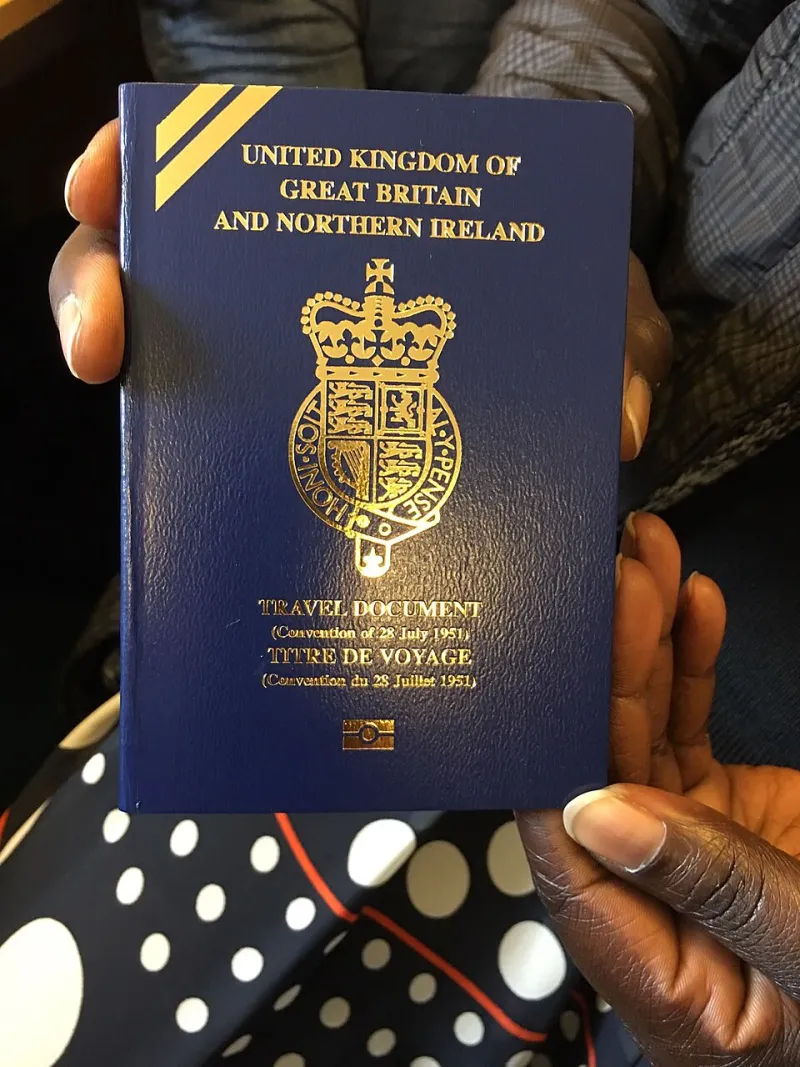
Photo: User:Magicpiano, CC BY-SA 4.0, via Wikimedia Commons
On a Saturday morning in a church hall in south London, a group of British-Nigerian professionals is on a video call with a state governor eight hundred miles from the capital they left. The conversation is about a hospital, a scholarship scheme and a trade delegation that will land at Heathrow in the spring. No one from the Foreign, Commonwealth and Development Office is present. No one thinks to invite them.
It is a scene repeated across the country, in Ukrainian Saturday schools in Reading, in Hong Konger community centres in Manchester, in Somali associations in Bristol and Polish parishes in Southampton. Britain's diaspora is now one of the country's most active instruments of international relations, and it operates largely without a strategy, a budget or a map.
A parallel foreign service
The scale is easy to underestimate. Roughly seven hundred thousand people born in Poland live in England and Wales; more than two hundred thousand were born in Nigeria; well over a hundred thousand Ukrainians have arrived under the sponsorship schemes since 2022; more than a hundred and fifty thousand Hong Kongers have taken up BN(O) visas. Add long-established Indian, Pakistani, Bangladeshi, Somali, Iranian, Sudanese and Congolese communities, and the picture is of a country whose foreign relationships are embedded in its own streets.
The functions these networks perform look remarkably like diplomacy. They translate intent between London and capitals that distrust formal channels. They host visiting ministers and opposition figures. They raise money for humanitarian relief faster than any government mechanism. And they are frequently the first to warn that something is going wrong.
Sudan is the clearest recent example. British-Sudanese organisations were raising the alarm about Khartoum's trajectory and then about the war in Darfur long before the conflict was treated as a front-rank crisis in Whitehall. The same has been true of Nagorno-Karabakh, of Ethiopia's Tigray war and of the crackdown on protests in Iran. Community groups function as an early-warning system that the formal machine has not learned to plug into.
The blind spot
The Foreign Office is organised by country, not by community. Its desks are geographic, its reporting is state-to-state, and its engagement with diaspora is ad hoc — dependent on the inclination of an individual ambassador or the persistence of a particular MP. There is no diaspora directorate, no standing mechanism for consultation before a policy shift, and no requirement that a post's business plan account for the community closest to the file in Britain.
The 2020 merger of the Foreign Office and the Department for International Development did not create that gap, but it did not close it. Nor has the shrinkage of the diplomatic network helped: fewer staff in fewer places means fewer people whose job it is to know who in Birmingham actually speaks for a region of Pakistan or a faction in Somalia.
Where the state does engage, the lens is often wrong. Diaspora communities are approached as a consular burden, a security question or a domestic electoral bloc. Counter-terrorism programmes, the Prevent duty and the hostile-state agenda all shape the relationship before anybody thinks to ask what a community knows about the country it left.
That framing has costs. Transnational repression — the intimidation of exiles by foreign governments on British soil — is now a documented problem for Hong Konger, Iranian, Eritrean and other communities. Responding to it requires the same officials who ought to be drawing on those communities' knowledge, and the two functions are rarely designed together.
The risk of capture
A strategy that treats diaspora as an unqualified good would be naive. Community organisations can be captured by foreign governments through funding and patronage. Communal conflicts travel: Kashmir, the Horn of Africa and the Middle East have all generated tensions in British cities that local authorities have struggled to manage. Self-appointed spokesmen claim to represent populations that are far from unanimous.
Any serious engagement would need transparency about funding, a refusal to treat one organisation as the voice of a whole community, and a clear line between consultation and endorsement.
What a proper approach would look like
None of this is beyond the wit of a mid-sized foreign ministry. A diaspora mapping exercise could sit inside each post's annual plan, listing the community networks with genuine standing on the file. A standing advisory council, with rotating community representatives and published minutes, would give ministers a source of advice that is not filtered through a capital's embassy. Modest funding for bridge organisations — with disclosure rules attached — would strengthen the credible ones and expose the captured ones.
Diplomats should be trained to use these networks, and language skills should be treated as an operational asset rather than a cultural ornament. When a crisis breaks, a rapid consultation mechanism should be as routine as convening a Cobra meeting.
Most of all, the Foreign Office should stop thinking of diaspora as a domestic matter that occasionally intrudes on foreign policy. For a country with Britain's history and its present composition, the reverse is closer to the truth. The communities here are not an afterthought to the national interest; they are one of the few forms of influence Britain still possesses in quantity.
A terraced house in Manchester will never replace an embassy. But when the embassy is stretched, slow or simply absent, it is increasingly the terraced house that gets the call answered.