Stamped and Diminished: Britain's Passport Slide and the Politics of Mobility
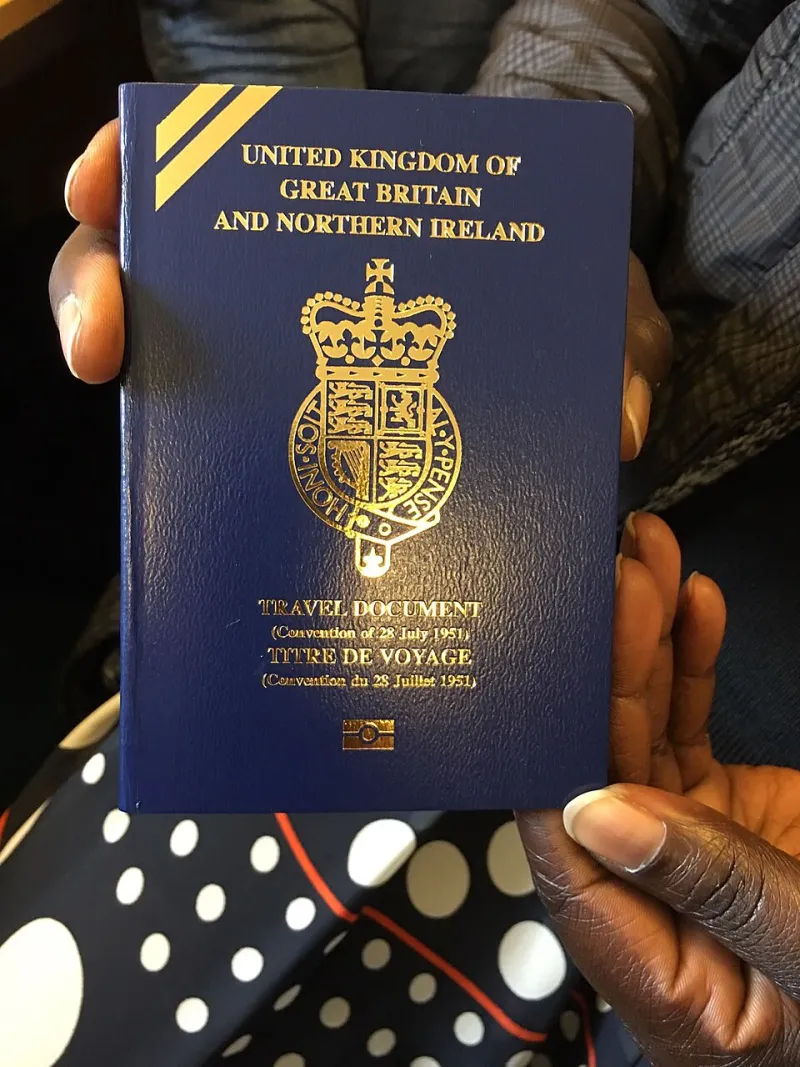
Photo: Abi Begum, CC BY 2.0, via Wikimedia Commons
The passport is a small book with a large political shadow. For decades, the British document was treated as a quiet symbol of national standing: a navy-blue cover that opened doors, smoothed business trips and reassured travellers that the world was arranged in Britain's favour. That confidence has faded. The UK passport still ranks among the stronger documents in the world, but it is no longer in the top tier. Its slide is a story about diplomacy, reciprocity and the limits of slogans.
Passport rankings are crude instruments. They measure visa-free access, not the quality of that access, and they change with every reciprocal deal. Yet they are revealing precisely because they are so simple. A passport is a state's promise to the world: this person is ours, and we expect you to treat them fairly. When that promise loses value, it is usually because the state behind it has become harder to deal with, or less important to deal with.
A league table with political meaning
Britain once sat near the very top of the global mobility tables. It was not because British citizens were uniquely virtuous, but because Britain was a hub of trade, tourism, education and diplomacy. Visa-free access was part of a wider bargain: Britain was open for business, and others reciprocated.
That bargain has frayed. The UK remains a major economy with a strong passport, but its relative position has slipped. Competitors in Asia and the EU have climbed. The British document now sits in the respectable middle of the top group rather than at its summit. For most holidaymakers, the difference is manageable. For business travellers, academics, artists and families, it is felt in forms, fees and waiting times.
Brexit's long tail
The 2016 referendum was fought over sovereignty, not passports. But leaving the EU changed the terms of British mobility in ways that were always going to be visible. Freedom of movement ended. British citizens lost the automatic right to live and work across the continent. Short stays in the Schengen area are now subject to the 90/180 rule. The EU's forthcoming electronic travel authorisation will add another layer of bureaucracy for British visitors.
None of this makes the British passport weak. The UK still has visa-free access to well over 170 destinations. But it has lost a distinctive advantage: the ability to move within its own neighbourhood as a citizen, not a third-country national. For a country that claims to be global, that is a notable diminution.
Reciprocity and the visa bargain
Mobility is not a one-way street. It is a negotiated exchange. If Britain makes it harder for others to enter, partners will look for ways to make it harder for Britons to enter. The UK's visa system is expensive and complex: visitor visas, student visas, work visas and the Immigration Health Surcharge all impose costs that signal restriction as much as control.
Some of these policies are defensible. Border control is a legitimate function of the state. But the cumulative effect matters. When the UK tightens student dependant rules or raises fees, universities and exporters feel the consequences. When it refuses to agree youth mobility deals, younger Britons lose opportunities. When it delays visa decisions for researchers and artists, the damage is done quietly but durably.
The government has pursued reciprocal arrangements with countries such as India and China, and has youth mobility schemes with Australia, New Zealand, Canada, Japan and South Korea. But progress is uneven. A youth mobility deal with the EU has been discussed without being delivered. The domestic politics of immigration make concessions costly, even when they would serve British interests.
Soft power at the border
The passport is also a soft-power instrument. It shapes the first impression a country makes. A welcoming visa regime says that Britain is open to talent, investment and ideas. A restrictive one says the opposite, however loudly ministers protest otherwise.
The UK's universities, cultural institutions and creative industries depend on mobility. So does its reputation as a diplomatic hub. When journalists, academics or officials struggle to obtain visas, the message travels. It is not just the traveller who is inconvenienced; it is the relationship that is not built.
The Home Office's operational priorities and the Foreign Office's strategic interests are not always aligned. Border security, fraud prevention and immigration control are legitimate concerns. But mobility policy is foreign policy too, and it is too rarely treated as such. The passport is a message, and at the moment the message is mixed.
Can the slide be reversed?
Yes, but not by consular tinkering alone. Rankings can improve through reciprocal visa agreements, streamlined processes and targeted youth mobility schemes. Britain could make its visa system faster and cheaper for key groups: students, researchers, business travellers and cultural workers. It could pursue a genuine youth mobility deal with the EU, not merely a talking point. It could recognise qualifications more readily and reduce the bureaucratic friction that makes Britain feel closed.
None of this is easy. Immigration is a salient political issue, and any government that appears to loosen the border will be accused of weakening control. But control and openness are not opposites. A well-managed mobility system can be both secure and welcoming. The failure to distinguish between the two is what has cost Britain influence.
The message in the cover
The British passport is still a valuable document. It still opens doors, and its holders still enjoy privileges that many in the world can only dream of. But its slide is a warning. It shows that global influence is not inherited. It is negotiated, maintained and sometimes lost.
The passport is a small book, but it carries a large question: what kind of country does Britain want to be? A country that treats mobility as a threat, or one that treats it as a tool of influence? The answer will be read at every border, in every visa queue and in every ranking. The world is watching, and the stamp is not flattering.