The Help Desk Abroad: Britain’s Consular Promise and Its Limits
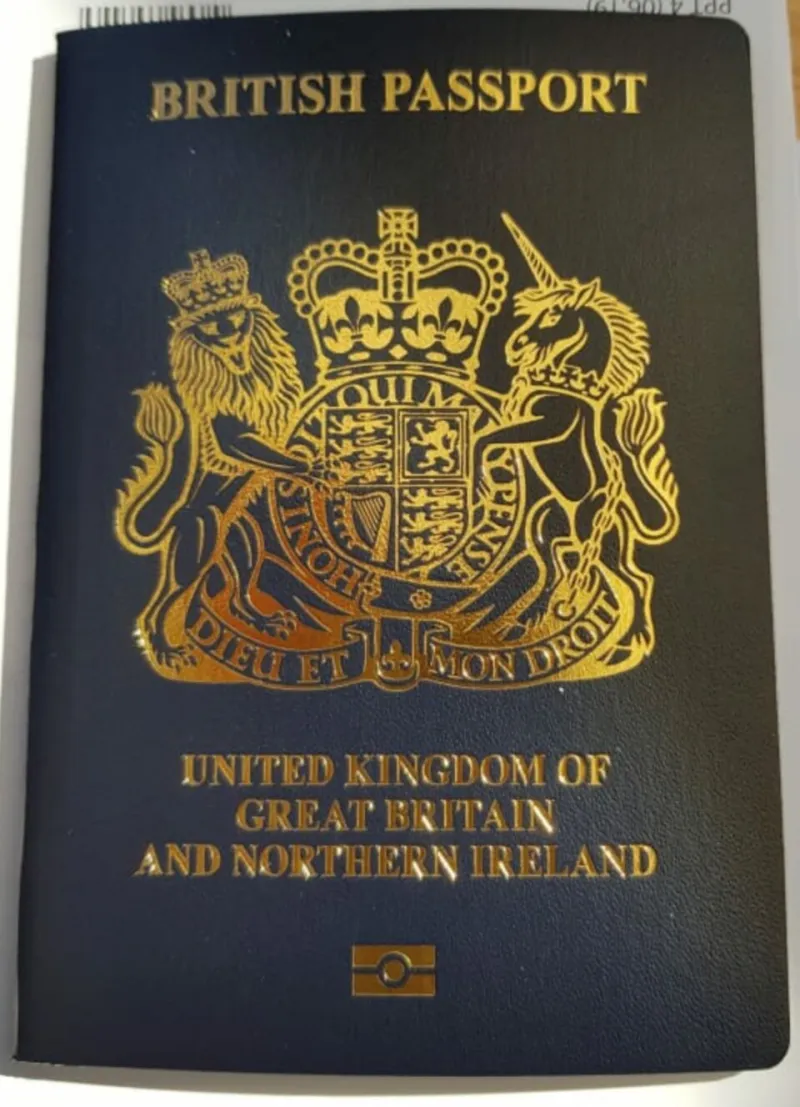
Photo: Paulwidnes1, CC BY-SA 4.0, via Wikimedia Commons
Most Britons encounter the Foreign, Commonwealth and Development Office not through summits or treaties but through a phone line, a form or a counter in a distant capital. The passport is lost. A relative has been arrested. A hospital wants payment. A country is closing its airspace. In those moments, consular work stops being an abstraction and becomes the most tangible form of the British state abroad.
That is also why it is so politically sensitive. Consular assistance is judged not by strategy papers but by whether someone answers, and whether the answer is useful. The gap between public expectation and practical capacity is one of the quieter strains in British diplomacy, and it deserves more honest scrutiny in 2026.
The promise behind the passport
A British passport is not a guarantee of rescue. The FCDO is careful to say that consular staff cannot pay legal bills, secure release from prison, override foreign law or guarantee evacuation. What they can do is more modest and more important: provide information, contact family, visit detainees where permitted, liaise with local authorities, issue emergency documents and, in exceptional circumstances, help with repatriation or evacuation.
Yet the public rarely hears the caveats until something has gone wrong. Travel advice is read as reassurance rather than risk assessment. Insurance is treated as an optional extra. Social media turns individual cases into moral tests, and ministers are asked why the state did not do more. The result is a consular system that carries a heavy reputational load on a relatively narrow statutory base.
A service under strain
Consular work sits at the intersection of diplomacy, social work, immigration policy and crisis management. It requires local knowledge, language skills and judgement. It also requires staff. Britain’s diplomatic network is wide, but it is not unlimited, and the FCDO has faced the same pressures as the rest of Whitehall: constrained budgets, competing priorities and a tendency to treat back-office functions as candidates for efficiency savings.
Digital services have eased some of the routine burden. Online passport applications and contact centres can handle simple cases. But the cases that matter most are rarely simple. An arrest in a country with a language barrier and a slow legal process can absorb hours of staff time. A bereavement abroad involves local authorities, funeral directors, insurers and family members in the UK. A mental health crisis overseas can require police, hospitals and consular staff to coordinate across time zones. These are not tasks that scale neatly.
Caseloads have also become more complex. More British nationals travel, work and retire abroad. Dual nationality is more common, which can complicate claims to consular protection. Crises are more frequent and more visible. The FCDO’s consular staff are expected to be both empathetic and legally precise, and to do it all while maintaining the wider diplomatic relationship with the host country.
Crisis, queue and the limits of evacuation
The evacuation operations of recent years — Afghanistan in 2021, Sudan in 2023, Lebanon in 2024 — were genuine tests of the system. Each exposed the same tension: the state cannot move everyone at once, eligibility rules are unavoidable, and the most vulnerable are often the hardest to reach. Consular crisis teams performed remarkable work under pressure, but the public debate afterwards focused on who was left behind and why.
That debate is legitimate. It is also a reminder that evacuation is not a consular service like replacing a passport. It is a political and military operation with diplomatic consequences. Britain can improve its planning, its pre-registration systems and its communication with diaspora communities. It cannot promise that every British national will be reached in every scenario. A more honest consular diplomacy would say so clearly, before the crisis rather than after it.
Fees, fairness and the expectation gap
Consular services are partly funded by fees, and that raises questions of fairness. Wealthier travellers can buy insurance and legal support; others rely on the state as a last resort. The FCDO’s emergency loans and document services are not free, and nor should they be. But a system that charges for help while warning that help is limited can feel transactional to citizens who regard the passport as a reciprocal bargain.
The answer is not to promise more than can be delivered. It is to be clearer about the bargain. Travel advice should be sharper about risk. Insurance should be treated as a civic necessity, not a travel accessory. Consular performance data should be published in a form the public can understand. Parliament should scrutinise consular capacity as seriously as it scrutinises defence procurement. And the FCDO should be honest about the staffing and reserve funding needed for crisis response.
An honest consular diplomacy
Consular work is often described as the soft edge of diplomacy. That undersells it. It is where the state meets its citizens in the places where its authority is thinnest. It shapes trust at home and reputation abroad. A country that answers the phone, visits the detained and explains the limits of its power is not weaker for being honest. It is more credible.
For Britain in 2026, the consular gap is not only a matter of resources. It is a matter of narrative. The UK needs a consular diplomacy that promises less in slogans and delivers more in practice: better pre-departure information, funded crisis reserves, clearer eligibility rules, stronger support for staff and a public conversation about what the passport can and cannot do. The alternative is a system that is judged by its worst-case failures and never credited for its quiet successes.
That would be a modest reform, but a meaningful one. In a world of rising travel, repeated emergencies and stretched public finances, the help desk abroad is not a peripheral service. It is one of the few places where foreign policy is felt personally. Britain should treat it accordingly.