Two Whitehalls, One Signal: Britain's Visa Regime and the Erosion of Diplomatic Trust
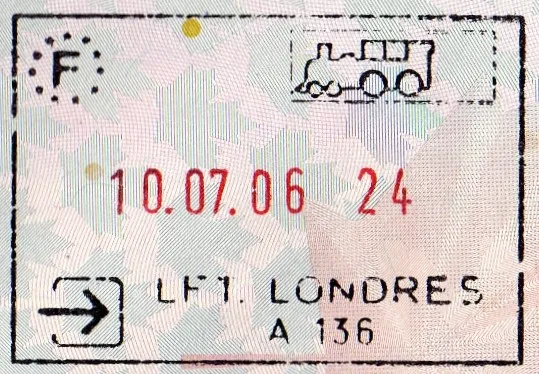
Photo: France, Haiti, UAE, UK, US passport stamps.jpgg: Jon Evans derivative work: Bonus bon, CC BY-SA 2.0, via Wikimedia Commons
British foreign policy is often described as a contest between values and interests. In practice, it is also a contest between departments. The Foreign, Commonwealth and Development Office speaks of partnership, exchange and influence. The Home Office speaks of control, compliance and risk. When the two messages reach foreign capitals together, the second tends to drown out the first. Visa policy is not usually debated as foreign policy. It should be.
The veto that never reaches the cabinet table
A visa refusal is rarely a diplomatic incident in itself. It is a form, a fee, a delay, a request for documents that few applicants can easily supply. But multiply those small administrative decisions across visiting officials, academics, students and researchers, and a pattern emerges. Britain asks allies for cooperation while making it harder for their people to reach British institutions. It invites the world to study, research and do business here, then greets parts of that world with suspicion at the border.
The structural problem is that immigration policy is made for domestic politics, while its consequences are felt abroad. The Home Office is accountable for border control and public confidence. The FCDO is accountable for relationships it cannot fully control. Ministers in the latter can announce a new strategic partnership; ministers in the former can prevent the exchange that would give it substance. There is no obvious mechanism for the foreign policy cost of a visa decision to be weighed against its domestic political benefit. That is not a failure of individual officials. It is a failure of government design.
Allies notice the queue
The damage is cumulative and quiet. A diplomat's domestic worker waits months for clearance. A research collaboration stalls because a visiting scholar cannot get an appointment. A foreign ministry notices that its officials are treated as potential overstayers first and partners second. None of this produces a headline. All of it produces a memory.
Britain's soft power has long rested on institutions that depend on mobility: universities, laboratories, cultural bodies, professional networks and the English language itself. These are not decorative assets. They are channels through which British preferences are explained, contacts are built and trust is stored for harder times. A restrictive visa regime does not shut those channels overnight. It narrows them, slows them and makes them expensive. Competitors with simpler processes and warmer rhetoric are only too willing to absorb the traffic.
The sceptical internationalist should resist exaggeration here. Border control is a legitimate function of the state, and no serious government can ignore security or abuse. The argument is not that Britain should abandon checks. It is that a system calibrated almost entirely around deterrence sends a signal that Britain's default posture toward foreigners is suspicion. For a country whose influence depends on being a hub, that is a strategic error.
Global Britain's half-open door
Since the language of Global Britain entered the lexicon, ministers have repeatedly linked overseas influence to openness at home. The link is real, but it is awkward for a government that has also made immigration restriction a central political project. The result is a familiar dissonance: Britain wants to be a science superpower, a diplomatic heavyweight and a bridge between economies, while its visa system treats many of the people who would make those claims credible as a category of risk.
This is not merely a question of numbers. It is a question of signal. Countries watch how their citizens are treated. They notice when a visiting delegation is delayed, when a student route becomes more expensive, when a researcher's dependants are discouraged from accompanying them. They draw conclusions about how seriously Britain takes the relationship. Those conclusions are not always fair, but they are rational. Diplomacy is conducted through people, and people remember queues.
An instrument left in the drawer
There is no shortage of possible remedies, though each involves trade-offs. Strategic categories of visitor could be reviewed with explicit foreign policy input. Processing targets could be published so that delays become a management problem rather than a mystery. Reciprocal arrangements could be pursued where they serve British interests. Universities and research bodies could be consulted not as supplicants but as partners in influence. None of this requires abandoning control. It requires admitting that control has costs beyond the border.
The deeper issue is coordination. A country that wants to project influence must treat mobility as part of its foreign policy toolkit, not as an inconvenience to be minimised by another department. If the FCDO cannot argue for a visa decision to be weighed against diplomatic consequence, then its strategy documents will remain aspirational. If the Home Office is never asked to account for the international fallout of its rules, then restriction will always win the internal argument.
Britain is not unique in struggling with this tension. Many democracies have tightened border rules while claiming to remain open to talent and partnership. But Britain's position is particularly exposed because its influence is so heavily relational. It has less raw power than it once did, and more need of the networks that visas either enable or obstruct. A Global Britain that keeps its door half-shut is not a contradiction in terms so much as a warning about capacity. The visa system is not separate from foreign policy. It is one of the ways foreign policy is delivered, day by day, applicant by applicant. At present, it is delivering a message that Whitehall may not intend but much of the world can hear.