The Interpreted World: Britain's Language Deficit and the Limits of Influence
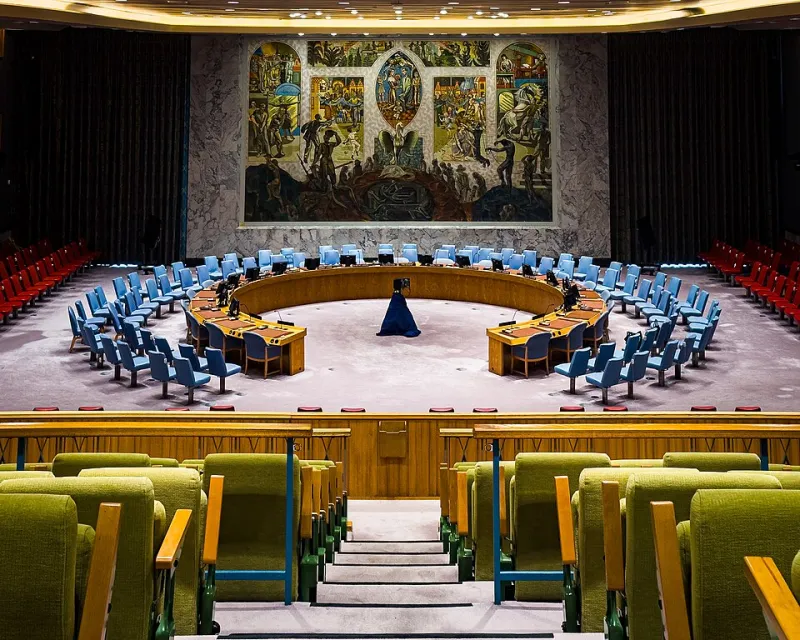
Photo: AAkhmedova (WMF), CC BY 4.0, via Wikimedia Commons
In a negotiation room, the difference between a settlement and a stalemate often lies in what is left unsaid. Britain's diplomatic service has long understood this, which is why the Foreign, Commonwealth and Development Office maintains a language-training programme and pays allowances for hard-to-learn tongues. But the pipeline that supplies those skills is narrowing, and the consequences are beginning to show in the unglamorous places where foreign policy is actually made: briefing rooms, consular desks, sanctions negotiations and intelligence assessments.
The problem is not that Britain has stopped teaching languages. It is that the country has become steadily less able to produce adults who speak the languages that matter most. Arabic, Mandarin, Russian, Farsi, Korean and Urdu are classified by Whitehall as operational priorities. Yet the university departments that once supplied a steady stream of graduates are fewer, smaller and more precarious than they were a generation ago. Modern languages at A-level have declined over successive years, and the closure of several university language departments has been documented by subject associations and sector bodies. The result is a narrower base from which the diplomatic service, the security agencies and the armed forces can recruit.
The Quiet Attrition of the Pipeline
This is not a sudden crisis. It is the accumulated effect of choices made over two decades. Schools have prioritised subjects that count towards performance measures. Universities have consolidated departments under financial pressure. Students have gravitated towards degrees with clearer employment prospects. Each decision was rational in isolation. Together they have produced a strategic vulnerability that is hard to reverse quickly, because fluency in a hard language is not a matter of a short course. It takes years of sustained study, immersion and practice.
The Foreign Office has tried to compensate through in-house training. Its language centre runs intensive courses, and officers nominated for priority languages can spend months or even years reaching professional competence. That system remains one of the better features of the British diplomatic machine. But it is expensive, slow and limited by the number of officers who can be spared from other duties. It also depends on a supply of recruits with an aptitude for languages, which is precisely what the school and university system is producing less reliably.
Brexit added a further twist. The UK no longer participates in European Union structures that once provided interpretation and translation support, and it has had to rebuild capacity that was previously pooled. That is not the main cause of the shortage, but it has made the arithmetic less forgiving.
What Happens in the Room
Interpreters are indispensable, and Britain employs some excellent ones. But interpretation is a filter, not a substitute for comprehension. A minister who relies entirely on an interpreter is dependent on someone else's judgment about tone, ambiguity and cultural register. In fast-moving negotiations, the gap between hearing a phrase and understanding what it signals can be decisive.
The same applies to intelligence and open-source analysis. Much of the material that shapes policy is not in English. Being able to read a foreign ministry statement, a parliamentary debate or a social media argument in the original language allows officials to catch nuance that translation software flattens. Machine translation has improved markedly, but it remains poor at irony, allusion and the coded language of diplomacy. An officer who can listen directly is simply better equipped than one who cannot.
There is also the question of trust. Foreign counterparts notice when a British official speaks their language, even imperfectly. It signals seriousness. It also gives Britain access to conversations that do not happen in English. In the Gulf, in Central Asia, in parts of Africa and in the Indo-Pacific, relationships are built in languages other than English, however widely English is spoken.
The Career Problem
Whitehall's difficulties are not only about supply. They are also about incentives. Language skills are valued in principle, but careers are still shaped by generalist postings and managerial experience. An officer who spends two years learning Mandarin is spending two years away from the competition for promotion. The language allowance helps, but it does not fully offset the opportunity cost. Retention is a further problem: the private sector pays more for fluent speakers, and the security services compete with banks, consultancies and technology firms for the same small pool.
This is where a quiet cultural assumption matters. Britain has long treated language ability as a personal accomplishment rather than a strategic asset. That assumption was tolerable when the country could draw on a broad imperial and European linguistic inheritance. It is less tolerable now. The strategic environment is one in which rival powers invest heavily in language training and regional expertise, and in which Britain's allies are also waking up to their own shortages. The United States has its own language gaps, but it spends considerably more on federal language programmes. France and Germany maintain dense networks of schools and cultural institutes that sustain language capacity abroad. Britain's cultural diplomacy is strong, but it is not a substitute for civil service capability.
A Repair That Fits the Age
The remedy is not a nostalgic call for every pupil to learn Latin. It is a targeted, unglamorous programme of repair. That means protected funding for priority language departments at universities, bursaries for students who commit to hard languages, and a clearer route from language competence into the diplomatic and security services. It means reviewing the career incentives that discourage able officers from spending time on intensive study. It means using the diaspora as a bridge, while being honest that heritage speakers are not a standing reserve of cleared, trained officials.
Above all, it means treating language capacity as infrastructure. Bridges and broadband are maintained because they are understood to be strategic. So are ears. A country that cannot listen in the languages of its competitors and partners will find itself relying on other people's summaries, other people's interpretations and other people's judgments. In an age of hard power, that is a weakness Britain can ill afford.