The Shared Ear: Britain, Five Eyes and the Price of Intelligence Intimacy
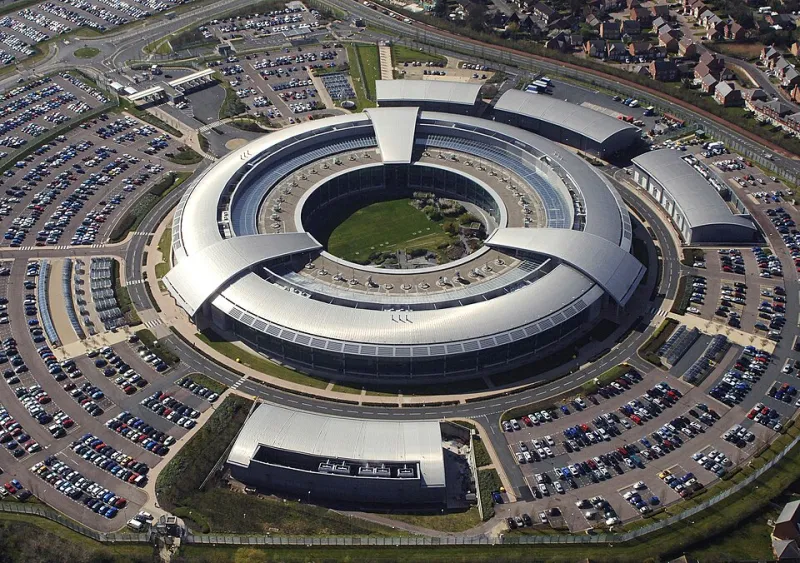
Photo: Ministry of Defence, OGL v1.0, via Wikimedia Commons
For a country that has spent the past decade searching for a post-Brexit role, the Five Eyes intelligence alliance has become one of Britain’s most comforting assets. It is Anglophone, discreet, technically formidable and, crucially, not European. In Whitehall’s telling, the network is proof that London still sits at the top table of Western security. Yet the comfort may be misleading. Intelligence intimacy buys Britain a seat in a very exclusive room; it does not guarantee a say in the decisions that matter most.
The arrangement is often described as a family of like-minded states: the United Kingdom, the United States, Canada, Australia and New Zealand. That language is warm but imprecise. Five Eyes is a practical bargain built on signals intelligence, threat-sharing and mutual trust, with roots in the Cold War and, before that, in wartime co-operation. It has survived disagreements, leaks and political turbulence because the participants need one another. But need is not the same as equality, and trust is not the same as influence.
An alliance of convenience and habit
Britain’s post-Brexit diplomacy has leaned heavily on security and intelligence as markers of national weight. The integrated review of defence and foreign policy placed science, technology and cyber capabilities near the centre of Britain’s offer to the world. GCHQ’s reputation, MI6’s networks and the UK’s role in Five Eyes are presented as evidence that Britain remains a serious power with global reach. That is partly true. Few countries can match Britain’s combination of technical capability, legal framework and long-standing liaison relationships.
But there is a difference between being useful to an alliance and being able to shape its direction. Five Eyes works best when its members broadly agree on the threat. When they do not, London’s leverage is limited. The network is not a cabinet with a chair for Britain; it is a set of relationships in which the largest partner, the United States, inevitably carries the most weight. Britain can inform American decisions, but it cannot veto them.
The China fault line
Nowhere is that asymmetry clearer than on China. Washington has moved toward a more confrontational posture, combining export controls, investment screening and security warnings with periodic diplomatic outreach. Britain has edged in the same direction, but with a different rhythm. London’s China policy has been pulled between security concerns, commercial interests and the desire not to be left behind by Washington. The result has often looked less like strategy than improvisation.
For Five Eyes, China poses a familiar problem: how to share intelligence and align policy without pretending that all members face the same risks or have the same interests. Australia has its own Pacific anxieties. New Zealand has often taken a more cautious line on China. Canada has confronted allegations of foreign interference that have reshaped its domestic politics. Britain, meanwhile, is trying to protect its intelligence relationship with the US while preserving room for economic engagement with Beijing. That balancing act is understandable, but it weakens London’s claim to be a co-author of Western policy rather than a recipient of it.
The awkward question is whether Britain’s China stance is genuinely British or largely derivative of American priorities. Ministers insist that London makes its own judgments. In practice, the intelligence relationship creates gravitational pull. When the most powerful partner defines the threat, smaller partners tend to adapt. That is not betrayal; it is the ordinary logic of alliance politics. But it should not be mistaken for strategic autonomy.
Washington’s weather
The deeper vulnerability is political. Five Eyes depends on the assumption that its members will keep sharing sensitive material even when their domestic politics change. That assumption has been tested before.
In the United States, the return of Donald Trump to the White House in 2025 brought a familiar unpredictability to transatlantic relations. His administration’s approach to allies, trade and intelligence has been transactional, and the 2026 political weather in Washington remains unsettled. For London, the risk is not that America suddenly stops sharing secrets. It is that the relationship becomes more conditional, more politicised and more expensive to maintain.
Britain has already learned that intelligence co-operation can become entangled with other disputes. The 2013 Snowden revelations damaged trust in the intelligence community and exposed how much data-sharing underpins the wider relationship. More recently, arguments over encryption, data adequacy and legal access have shown that even close allies can disagree sharply about privacy and oversight. These are not abstract concerns. They affect British companies, civil liberties and the UK’s ability to strike independent data deals around the world.
What London pays
Access to Five Eyes comes with obligations. Britain is expected to protect shared material, align security clearances and maintain capabilities that other members value. It must also accept a degree of mutual scrutiny that would be politically sensitive if applied to other alliances. The public rarely sees this ledger. There is little discussion of what London gives up in return for access: legal flexibility, policy latitude, perhaps even the ability to pursue a distinct approach to countries that Washington views with suspicion.
That is the quiet cost of intelligence intimacy. It is not a bribe or a betrayal. It is the everyday price of dependence. Britain benefits enormously from the network, but it should be honest about the trade-offs. A country that treats Five Eyes as a substitute for broader diplomatic influence will find itself with excellent information and limited room to act on it.
Access without leverage
The Five Eyes relationship is one of Britain’s most valuable international assets. It should not be dismissed or downgraded. But nor should it be mythologised. Intelligence co-operation is a means, not an end. It can inform diplomacy, support deterrence and strengthen trust among allies. It cannot replace the harder work of building coalitions, shaping policy and persuading partners outside the Anglosphere.
For a UK audience accustomed to hearing that Britain punches above its weight, the lesson is uncomfortable. Five Eyes gives London a shared ear, not a commanding voice. It offers proximity to power, not control over it. The alliance will endure because the participants need it. The question for Britain is whether it can convert that intimacy into genuine influence, or whether it will continue to mistake access for leverage.